

If you’re near the end of your doctoral journey, you’re likely exploring job opportunities after PhD. You’re probably wondering about how to chart your career
Category: Researcher.Life

The research process has multiple steps, including critical must-dos before conducting research. Image by jannoon028 on Freepik What is research process and why is it necessary

Through our interactions with researchers, we’ve realized the importance of your finding a journal that fits your research needs. Whether it be identifying journals to

Are article summaries a solution to the problem ‘how to increase your citations?’ How do you measure your contribution in your field and as

Article retraction in academic publishing means removal of a published article from the journal (both from online and print channels). This is a last resort

Did you know there are different types of plagiarism in research you need to check for? Plagiarism is not a new concept. It has been

The process of conducting research can be a challenge, but then, ensuring you are able to use your data effectively is an even more difficult

Science rests on objectivity, which is derived mostly from data, and these data points are ideally presented as tables and figures in research papers. In

For most authors, the journal selection process is a challenge, and understandably so. There are about 42,500 peer-reviewed journals and 11,811 open-access journals,1 and this number
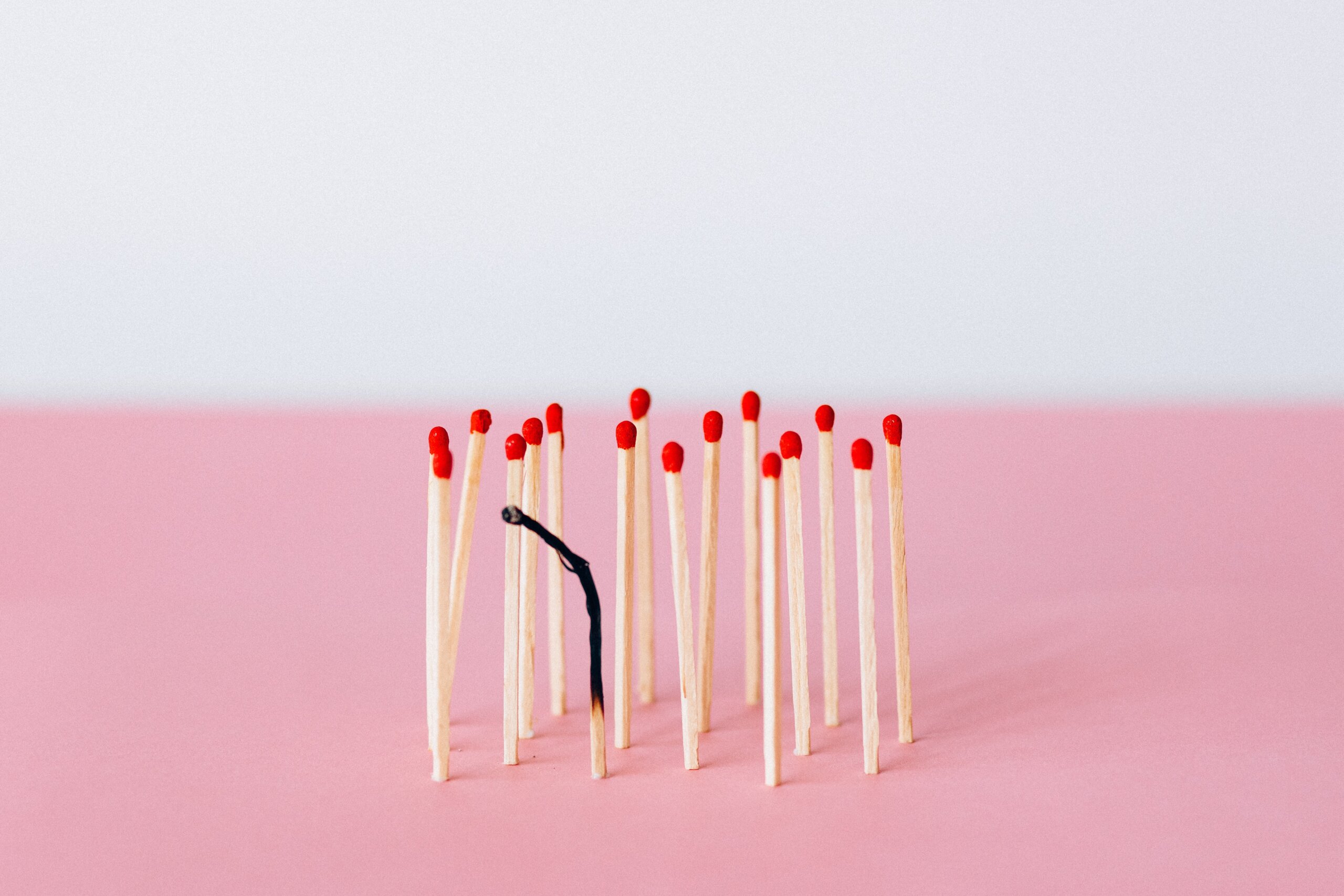
Concerns about mental health are not new in academia, and signs of academic burnout are quite common due to excessive workloads. According to a World

Academic conferences present valuable opportunities to learn about cutting edge research, meet new people, and build strong professional relationships with others in your field. Unfortunately,

The peer review system, including the various types of peer review, is an important part of the academic publishing process. The main aim of the

Storytelling in science is an art that one MUST learn in the field of research. Why, you may wonder? Take an example of this analogy.

Research communication is one of the very first skills that academicians need to cultivate when they embark upon their respective journeys. Whether it is for

Increasingly common in academia, bullying is a serious issue and can take on various forms, affecting researchers and academics across disciplines and geographies. One might

Quasi-experimental design is a research methodology used to investigate cause-and-effect relationships between variables when random assignment of participants to groups is not feasible or ethical.

Keywords are the essential terms or concepts that embody the main topics, ideas, and scope of a study. In a published article they usually appear

This year Cactus Communications celebrates 20 years of supporting researchers on their publication journeys. Starting with our editing service, Editage, CACTUS soon expanded to publication
This year Cactus Communications celebrates 20 years of supporting researchers on their publication journeys. Starting with our editing service, Editage, CACTUS soon expanded to publication
The Researcher.Life Ambassador Program is a global community of researchers who wish to give back to their academic communities through mentoring and collaboration with other
This year Cactus Communications celebrates 20 years of supporting researchers on their publication journeys. Starting with our editing service, Editage, CACTUS soon expanded to publication

Phenomenology is a qualitative research approach that aims to describe the essence of a lived experience as it is consciously perceived by the people who

Key Takeaways A persuasive essay needs a clear thesis, organized body paragraphs, and a conclusion that goes beyond simply repeating the introduction. Strong arguments combine

Science communication has long been an issue due to the many obstacles between the complex scientific knowledge and the readers. Sometimes, a subject is so

Key Takeaways: An SCI-indexed journal is listed in the Science Citation Index, a database of high-impact science journals now managed by Clarivate. SCI and SCIE

A PhD is only one of the many options that you have post your post-graduation. Even a decade ago, those considering research and academics exclusively

Discourse analysis is a qualitative research method used to study how language works in real social contexts. It looks beyond what is literally said or

The Researcher.Life Ambassador Program is a global community of researchers who wish to give back to their academic communities through mentoring and collaboration with other researchers. Researcher.Life Ambassadors empower themselves and their fellow researchers with advanced

A thesis is a long, structured piece of original research, written to demonstrate that you can identify a problem, study it rigorously, and report your
The Researcher.Life Ambassador Program is a global community of researchers who wish to give back to their academic communities through mentoring and collaboration with other researchers. Researcher.Life Ambassadors empower themselves and their fellow researchers with advanced

Can you believe it? A whole year has almost come to an end. 2021 seems to have simply whizzed past us. So much has happened

The Researcher.Life Ambassador Program is a global community of researchers who wish to give back to their academic communities through mentoring and collaboration with other researchers. Researcher.Life Ambassadors empower themselves and their fellow researchers with advanced
The Researcher.Life Ambassador Program is a global community of researchers who wish to give back to their academic communities through mentoring and collaboration with other researchers. Researcher.Life Ambassadors empower themselves and their fellow researchers with advanced
We reached out to a few researchers who’ve been associated with us and asked them what helped them succeed and what can help them further.
Researchers find purpose and meaning in their work in different ways, and what they define as success can vary. They may see success as having

The first thing that strikes you when looking at any of the guidelines on medical research is the contrived acronyms, starting right from QUOROM, short

Open access means free access to information and unrestricted use of electronic resources for everyone. A publication is defined as “open access” when anyone can

A scientist’s standing in the research community is based largely on the quantity and quality of their publications. Citations are a way to uniquely identify

Journal metrics come handy when researchers are tasked with the daunting job of narrowing down options and selecting the perfect journal to submit their work

A couple of years ago, I read two articles that deeply disturbed me. Both were about specific issues faced by academics and how certain aspects

The scholarly publishing world is growing, with an exponential increase in the number of researchers from non-English-speaking countries such as China, Japan, South Korea, and

In the field of academia, ethical research issues can cause a permanent dent to a researcher’s image. That is why, it is important that research ethics
It’s sometimes hard to articulate exactly what we mean by an ecosystem for academic researchers, and indeed the ecosystem itself is just a means to
Black History Month provides an annual opportunity to draw the public’s attention towards Black history heroes and celebrate their achievements. Here are some Black History
While in so many ways. 2020 proved to be a difficult year, the global crisis also gave people the time to take a pause, reflect,
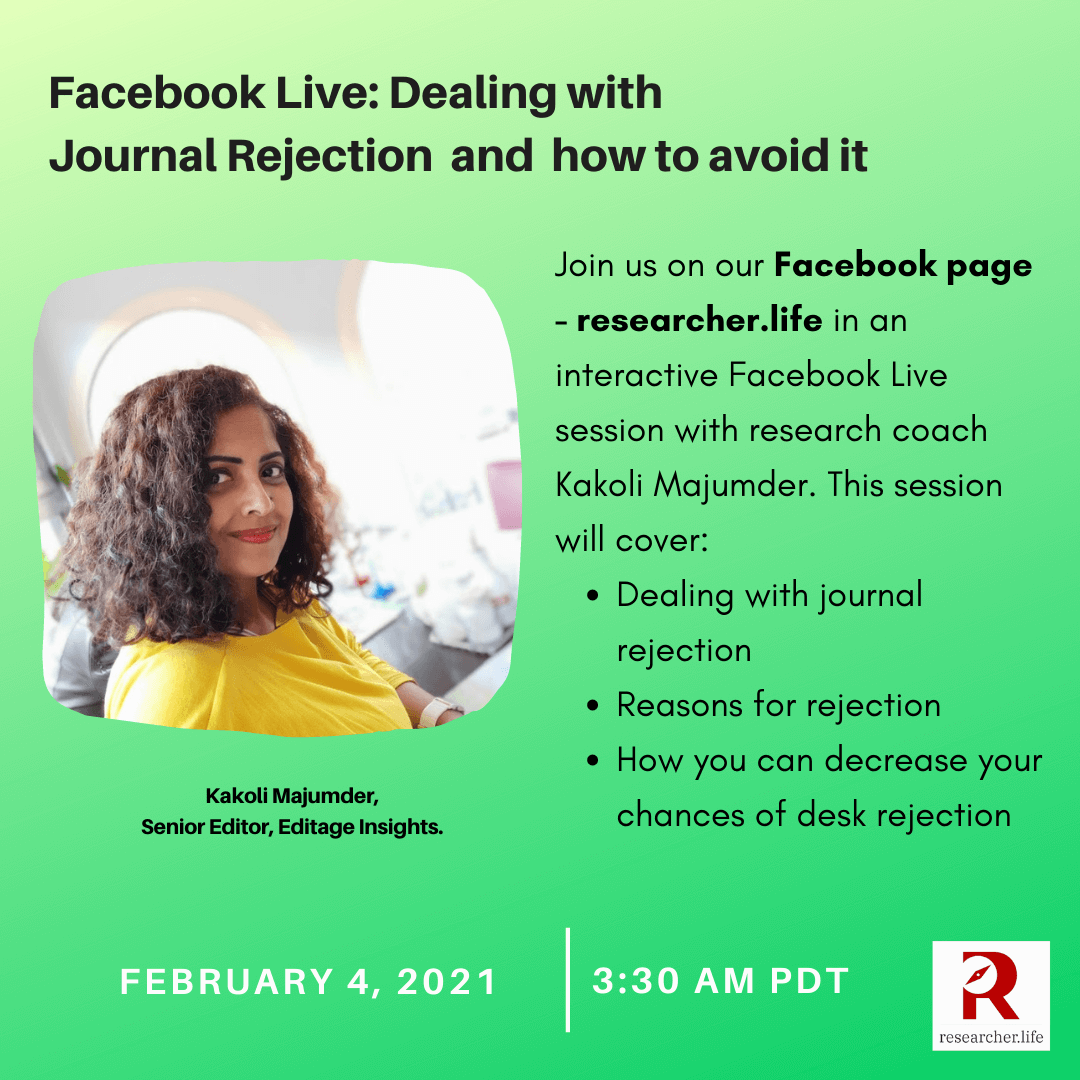
Rejection is a natural and necessary part of the academic publication process. Even the most famous researchers have had to face rejection. However that doesn’t

In a heartening move for researchers across the country, the government of India proposed an Open Science Framework in its Science, Technology, and Innovation (STI)

Summary: Most manuscripts follow the IMRAD structure: Introduction, Methods, Results, and Discussion, in that order. The title, abstract, and keywords decide whether readers, reviewers, and

Along with the intense pressure to publish their work, researchers across the world also have to deal with the crushing disappointment of rejection, or worse
“Research is to see what everybody else has seen, and to think what nobody else has thought.” – Albert Szent-Gyorgyi, Hungarian scientist One of the